
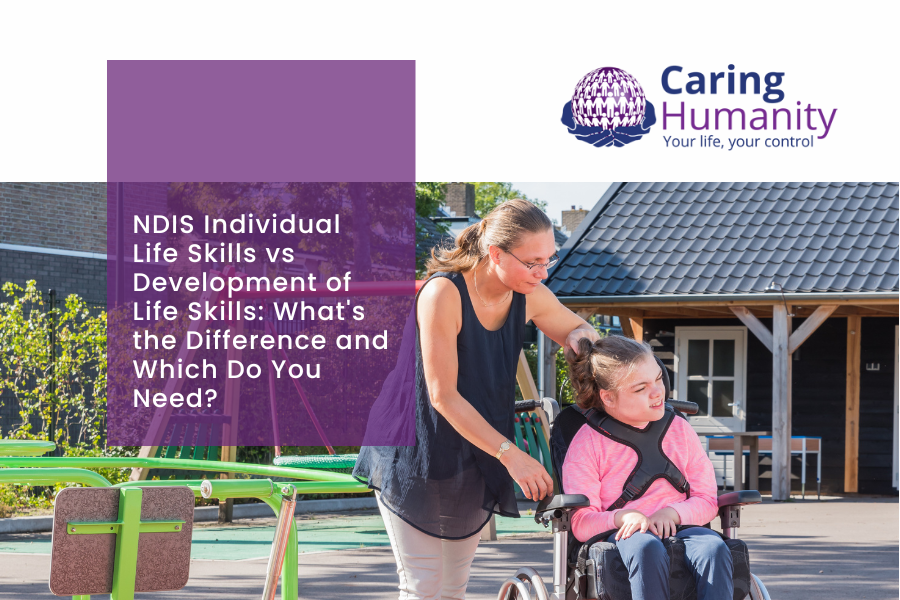
Specifically, it can be hard to spot the line between NDIS individual life skills vs development of life skills support.
The Structural Framework: Core Assistance vs Capacity Building
To understand NDIS individual life skills vs development of life skills, look at the main goal: is it for everyday help or for learning a new skill? The NDIS keeps these budgets separate, which changes how workers deliver their support.
1. Individual Life Skills (Core Supports)
2. Development of Life Skills (Capacity Building)
This model is kinda forward looking and developmental; it sits under the Capacity Building budget, and it’s typically funded within the Improved Daily Living Skills or Increased Social and Community Participation bands. The point is to design, roll out, and keep track of structured interventions that build practical capability over time, in a steady way
Operational Mechanics of Individual Life Skills
Practical Applications and Service Delivery
- Community Access: Support with outings, activities, and social participation.
- Personal Care: Help with hygiene, grooming, and dressing.
- Household Tasks: Assistance with cleaning, laundry, and daily chores.
- Appointments & Shopping: Support with appointments, shopping, and errands.
Strategic Dimensions of Life Skills Development
Core Curricula and Capacity Focus Areas
- Travel Training: Learn how to use public transport safely, plan journeys, and travel independently within the community.
- Money Management: Develop budgeting, banking, and financial skills to manage everyday expenses with confidence.
- Cooking Skills: Build confidence in meal planning, grocery shopping, safe food preparation, and healthy cooking.
- Home Management: Learn practical skills for cleaning, organising, laundry, and maintaining a safe and comfortable home.
- Communication Skills: Improve social confidence, communication, problem-solving, and relationship-building skills for everyday situations.
Comparative Analysis: Core Assistance vs. Capacity Building
Functional Dimension | Individual Life Skills (Core) | Development of Life Skills (Capacity Building) |
NDIS Budget Allocation | Core Supports | Capacity Building |
Strategic Intent | Environmental maintenance and immediate community access. | Long-term capability development and autonomy. |
Personnel Function | Task execution, safety oversight, and co-production. | Instruction, assessment, and progressive scaffolding. |
Temporal Structure | Ongoing, integrated into standard weekly schedules. | Time-limited, goal-bound, and systematically faded. |
Practical Example | A worker assists a participant in preparing a meal. | A trainer guides a participant to cook a meal independently. |
Diagnostic Criteria for Pathway Selection
Indicators for Individual Life Skills (Core):
- The participant presents complex functional or physical support needs that necessitate continuous, hands-on assistance to maintain baseline safety during daily tasks.
- The primary clinical or social objective is the prevention of isolation through immediate community access and social connection.
- The participant possesses the cognitive understanding of a task but experiences physical fatigue, mobility limitations, or structural barriers that prevent unassisted execution.
Indicators for Development of Life Skills (Capacity Building):
- The NDIS plan explicitly outlines milestones regarding independent living transitions, employment readiness, or a move into a lower-intensity care environment.
- The participant demonstrates the capacity to learn public transit routes across the ACT to eliminate dependence on specialized transport providers.
- There is a clear desire to build internal confidence in managing personal budgets, domestic purchasing, and home organization frameworks.
Navigating Plan Reassessments and Securing Funding
Strategic Implementation Steps
- Optimize Goal Construction: Ensure that the plan’s primary goals are drafted with developmental precision. For capacity building, ideal wording states: I wish to build my functional capacity to cook and travel independently to prepare for an autonomous living transition.
- Compile Objective Clinical Evidence: Secure comprehensive assessments from an Occupational Therapist (OT) or relevant Allied Health professional. The evidence must show that while the participant requires Core support for immediate safety, they have the cognitive or physical potential to learn these skills through a structured capacity building program.
- Engage Professional Support Coordination: Work with your Support Coordinator to audit your active budget lines. In many cases, flexible Capacity Building funds under the Improved Daily Living descriptor can be instantly deployed to activate a development program without waiting for a formal plan of reassessment.
Frequently Asked Questions
Can Core Supports funding be utilized to cover the tuition of a structured cooking course?
What administrative process occurs if a participant does not master a skill during a development program?
Is independent transit training a valid application of life skills development funding?
Can children access life skills development programs?
Can I use both individual and development support at the same time?
How long do NDIS skill development programs usually last?
Clinical Excellence and Autonomy with Caring Humanity
Whether you need a reliable support worker to help you get into the Canberra community this week, or you want to start a dedicated program to master independent travel, budgeting, or cooking, we are right here to help. Get in touch with Caring Humanity today for a friendly chat, and let’s work together to make your NDIS plan work for you.
