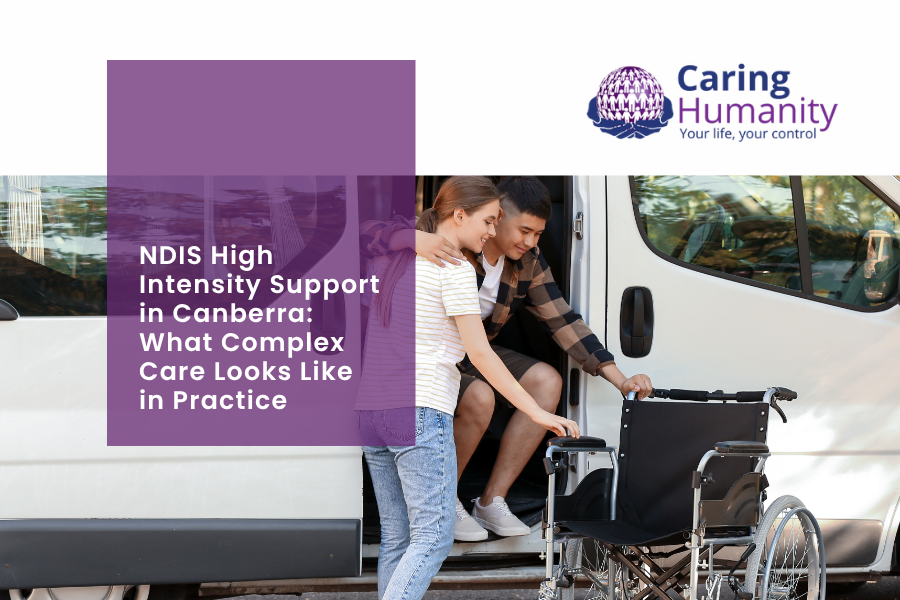
NDIS High Intensity Support in Canberra: What Complex Care Looks Like in Practice

Living with an intricate or complex health condition requires a lot of practical support, reliable safety measures, and a dedicated team. For many families across the Australian Capital Territory, standard drop-in disability support is simply not enough to manage daily routines. When a person has advanced health needs, they require specialised help known under the national scheme as high intensity daily activities of NDIS frameworks.

When dealing with complex disability care ACT services, the focus moves from general lifestyle to help precise, careful health management. At Caring Humanity, we know that understanding how this care works in daily life can give Canberra families a true peace of mind. This detailed guide breaks down the practical side of high intensity care, the role of trained workers, and how quality support keeps you safe while building your independence.

Understanding High Intensity Daily Activities Under the NDIS

The NDIS uses very specific categories to figure out funding levels based on health risks and medical necessity. High intensity support refers directly to situations where a NDIS participant needs workers with special skills to manage complex physical, medical, or behavioural challenges safely.

These tasks are formally called High Intensity Daily Personal Activities. Because these tasks carry higher safety risks, providers cannot give them to general support staff without proper training and regular clinical checks.
The Main Medical Categories of Complex Care
High intensity daily activities are deeply personal and usually involve specific medical tasks. In Canberra homes, these supports generally include:
  • Tube Feeding: Helping with nutrition through a PEG tube, from prep to cleanup.
  • Breathing Support: Managing ventilators, oxygen, and clearing airways safely.
  • Catheter & Bowel Care: Keeping everything clean to avoid infections.
  • Diabetes and Injection Care: Checking blood sugar levels regularly and giving daily prescribed injections under the skin.
  • Complex Wound Management: Looking after advanced skin dressings as directed by a healthcare professional to stop pressure sores or chronic infections from developing.

What Specialist Care Disability Canberra Looks Like Everyday

True high support needs disability Canberra services are never a simple, one-size-fits-all checklist. Real care focuses entirely on the person, making sure that medical tasks fit smoothly into your preferred daily lifestyle and household routines.
Customised Care Plans Led by Health Professionals
Before a worker starts, a health professional like a registered nurse must approve a detailed care plan. This plan maps out your daily routine, health signs to watch, and emergency steps. For example, if you have trouble swallowing, it will state the exact food and drink textures you need to stay safe.
Protecting Dignity, Choice, and Independence
An experienced support team understands that high intensity care takes place inside the private comfort of your own home. It is all about finding a good balance between safety and the dignity of risk. This means allowing you to make your own choices about your daily life, social plans, and community outings while managing your health vulnerabilities smoothly in the background.

The Big Financial Side: Funding and Pricing Tiers

Understanding how the NDIS funds these services is essential for managing your budget over the long term without running out of funds mid-plan.
Higher Pricing Tiers for High Intensity Work

Since high intensity care sort of demands additional learning, and it also brings more risk, the NDIS pricing guide permits a higher hourly rate for these services compared to standard day time care. That extra money helps providers cover workforce training in a real way, do regular competence checks, and keep nurse oversight happening. The funding sits inside your Core Supports budget, specifically under the Assistance with Daily Life section.

Tracking Your Core Support Flexibility
Because Core Supports are usually flexible, you can often set up your plan to book the particular care ratios you actually need. If your health shifts suddenly, like after an illness, or when you’ve been in hospital, your provider can help you fine tune the hours. In practice, that means your home care continues smoothly without awkward gaps across the week.

The Essential Role of a Complex Needs Support Worker ACT

You might wonder what makes a general support worker different from a specialised complex needs to support worker ACT professional. The difference comes down to documented competency, practical checks, and targeted training.
Competency-Based Training Frameworks

The NDIS Quality and Safeguards Commission has strict rules called High Intensity Support Skills Descriptors. These rules state that general experience is not enough to deliver complex care. Workers must complete hands-on training to prove they can do tasks like tube feeding or seizure management correctly before working alone.

Participant-Specific Assessments

A support worker might be fully certified in complex bowel care for one client, but they must still be checked against the unique plan of any new participant they assist. This makes sure they understand your personal communication style, your exact home setup, and your distinct physical needs.
Continuous Monitoring and Skill Reviews
Health needs can change very quickly. Registered providers make sure their support workers undergo annual skill reviews. If your condition alters, or if a worker has not done a specific complex task for more than three months, they must be reassessed immediately to keep everything completely safe.

Setting Up a Safe Home Environment for Complex Care

Delivering high-level care at home requires some preparation to ensure both you and your support workers stay safe during daily activities.

Assessing Physical Space and Accessibility

Your home may need specific modifications or equipment to help workers assist you without strain. This can include installing overhead ceiling hoists, electronic high-low beds, shower chairs, or widening doorways for specialized wheelchairs. An occupational therapist often visits the home to recommend these changes, ensuring the layout supports high-intensity daily routines.
Equipment Maintenance and Backups
When your wellbeing depends on electronic medical devices such as ventilators, or feeding pumps, having a straightforward backup plan is important. Quality providers will ensure that workers know how to check equipment battery levels, troubleshoot basic machine alerts, and access manual backup tools if a power outage occurs in the Canberra region.

Choosing the Right High Support Needs Provider in the ACT

Selecting the right team to look after high support needs disability Canberra services requires careful checking. Because these services involve medical tasks, working with an established, registered provider ensures you stay fully protected.
When looking at potential providers in the Canberra area, families should check for a few important features:
  • Clear Clinical Governance: The provider must have a direct link with registered nurses who handle worker training, sign off on care plans, and review health charts regularly.
  • Strong Incident Management: Ask the provider exactly how they handle equipment failures, sudden health drops, or local emergencies. They should have a clear, written plan ready.
  • Consistent Staff Rosters: Complex care requires a lot of trust and comfort. A quality provider will focus on building a small, dedicated team of familiar faces for you, rather than sending different casual staff to your home every week.
At Caring Humanity, our approach combines strict safety compliance with a friendly, human touch. This ensures participants across Canberra receive reliable, dignified care that fully respects their lifestyle choices and personal goals.

Frequently Asked Questions

What qualifies as high intensity support under the NDIS?
High intensity support involves personal daily activities that need special skills due to medical or behavioural complexity. Examples include tracheostomy care, tube feeding, complex bowel management, catheter care, injections, and advanced wound care. These tasks require workers trained against the official NDIS skills guidelines.
Do support workers need nursing degrees for high intensity care?
No, support workers do not have to be registered nurses, but they must complete special skill training run by a qualified health professional. They must prove they can follow the participant’s specific care plan safely and pass regular practical checks to ensure their skills stay up to date.
How does the NDIS fund complex disability care ACT services?
Complex care is paid through your Core Supports budget under the Assistance with Daily Life category. The NDIS price list sets higher hourly rates for these high intensity activities to cover the cost of special staff training, clinical updates, and regular nurse supervision.
Can a participant choose who delivers their high intensity daily activities?
Yes, choice and control are central parts of the NDIS. Participants and families can work with their provider to pick support workers who have the right medical skills and match the participant’s personality, communication style, cultural background, and everyday life preferences.
How often are high intensity care plans reviewed in Canberra?

Care plans for high intensity support must be reviewed by a health professional at least once every twelve months. However, an immediate review happens if your health changes, after a stay in hospital, or if your current support setup no longer meets your daily needs.

What is the role of a registered nurse in high intensity support?
Registered nurses provide vital health supervision. They look at your complex medical needs, write detailed support plans, deliver hands-on training to the disability to support workers, and complete regular audits to make sure the care given meets strict safety and quality standards.

Secure Reliable Complex Care in Canberra

Managing complex health needs should never mean missing out on a good quality of life or losing your independence. With the right training, proper nurse supervision, and a compassionate team, high intensity support allows participants to live comfortably and safely at home while staying active in the Canberra community.
If you are looking for dedicated, fully compliant, complex disability care ACT services, Caring Humanity is here to help you. Our highly trained team works closely with health professionals and families to deliver tailored support.

Contact Caring Humanity today to discuss your NDIS high intensity care needs and build a reliable support framework for your loved one.

Leave a Reply