
Choosing the right day program for yourself or a loved one is a significant decision. When exploring options, you want to know that the environment is welcoming, the staff are genuinely supportive, and the daily schedule offers meaningful experiences.
For many participants across the Australian Capital Territory (ACT), a well-structured program provides an opportunity to develop new skills, build friendships, and engage with the local community. But what makes the program truly outstanding?
Here is a clear look at what a great day in a program involves, how programs are structured, and how to find the right fit for your goals.
What Is NDIS Day Program, and Who Can Attend?
An NDIS day program is a structured service designed to support adults living with a disability to build practical skills, connect with peers, and participate in local activities. Funded primarily through the National Disability Insurance Scheme (NDIS) under core or capacity-building supports, these programs focus on personal growth, independence, and social inclusion.
Anyone with an active NDIS plan that includes funding for community participation, group activities, or social connection can access these services. Programs cater to a broad range of support needs, ensuring every participant receives tailored support suited to their abilities and personal goals.
The Elements of a Great Day Program
A high-quality program balances routine with variety. Rather than focusing on passive leisure, a great provider builds a schedule around active learning, skill development, and genuine community involvement.
Key Features of a Fulfilling Schedule
Personalised Goal Setting: Activities align directly with what everyone wants to achieve, whether that involves improving communication, learning independent living skills, or pursuing a hobby.
Balanced Daily Structure: A typical day blends structured learning, social time, movement, and community access.
Qualified, Empathetic Staff: Experienced support workers ensure a safe, inclusive environment while actively encouraging participant choice and control.
Flexible Pacing: Schedules adapt to individual energy levels and sensory needs throughout the day.
What Does a Typical Day Look Like in a Disability Day Program?
While every individual’s schedule differs based on their preferences, a day structured around growth and engagement usually follows a natural rhythm.
Morning: Welcoming Connections and Skill Building
The morning typically begins with a warm group check-in where participants discuss the day ahead and share updates. Following this, the focus shifts to practical life skills or creative expression.
Cooking and Nutrition: Learning to plan simple meals, chop ingredients safely, and prepare nutritious lunches.
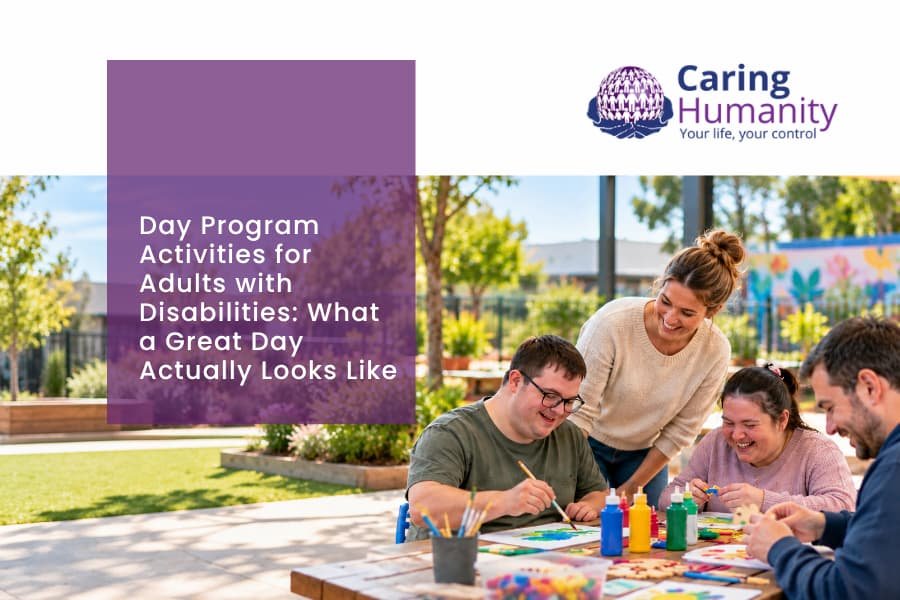
Creative Arts: Engaging in painting, pottery, or music workshops to express creativity and foster relaxation.
Digital Literacy: Building basic computers, tablets, or phone skills to help participants stay connected safely online.
Midday: Social Interaction and Shared Meals
Lunchtime serves as a central social hub. Participants sit together, practice conversation skills, and build friendships in a relaxed setting. Learning to prepare the dining area, share space, and clean up afterwards reinforces daily independent living skills.
Afternoon: Community Access and Recreation
Afternoons often take learning outside the centre into the local community. Accessing community spaces builds confidence and encourages real-world participation.
Physical Wellbeing: Gentle sports, walking groups, swimming programs, or movement sessions tailored to varied mobility levels.
Local Outings: Visiting local cafes, libraries, botanical gardens, or community centres in and around Canberra.
Volunteering and Learning: Participating in community garden projects, visiting museums, or practicing public transport routines.
Exploring Day Program Activities for Adults with Disabilities
The best disability day program activities engage participants mentally, physically, and socially. Here are some key activity areas commonly offered:
| Activity Category | Examples of Activities | Primary Focus & Benefits |
|---|---|---|
| Life & Independent Skills | Cooking, budgeting basics, home safety, public transport practice | Builds daily confidence and autonomy |
| Social & Communication | Group discussion circles, board games, collaborative team tasks | Improves communication and builds friendships |
| Creative Arts | Painting, craft, photography, music therapy sessions | Encourages self-expression and motor skills |
| Active & Outdoor | Walking tours, bowling, swimming, visits to local parks | Enhances physical health and coordination |
| Community Integration | Library visits, local shopping, volunteering projects | Fosters broader social inclusion |
How Do I Choose the Right Day Program for an Adult with a Disability?
Finding the right service requires evaluating how well a provider aligns with your individual goals, preferences, and support requirements.
1. Assess the Program Focus and Diversity
Look for a provider offering a rich calendar of disability day program activities. Ensure the provider caters to various interest levels and balances indoor learning with outdoor community access.
2. Evaluate Staff Expertise and Ratios
Ask about staff qualifications, experience with complex needs, and worker-to-participant ratios. Proper staffing ensures that participants receive tailored support and stay safe during community outings.
3. Consider Location and Accessibility
Choosing local services, such as disability day programs Canberra options, reduces travel time and makes daily routines smoother. Ensure facilities are fully accessible and equipped with appropriate support of amenities.
4. Schedule a Visit and Trial
Most quality providers invite prospective participants and their support networks to tour the facility, meet the team, and try a sample session. Observing the environment first hand helps confirm whether the setting feels welcoming and safe.
Why Community Connection Matters
Participating in group programs delivers benefits that extend far beyond daily entertainment. Consistent engagement helps adults with disabilities build self-esteem, form meaningful peer friendships, and maintain physical health. Crucially, it provides families and carers with reliable support, knowing their loved one is in a safe, constructive, and empowering environment.
Frequently Asked Questions
What does a typical day look like in a disability day program?
A typical day features a balanced blend of structured morning skill-building sessions, shared lunch periods, and afternoon community excursions. Activities are tailored to participant goals and cover life skills, creative arts, fitness, and local outings.
What is an NDIS day program, and who can attend?
An NDIS day program offers structured group activities focused on skill development and social inclusion. Any adult with NDIS funding allocated for community, social, or civic participation can attend programs matching their individual needs.
How do I choose the right day program for an adult with a disability?
Start by reviewing program activities, visiting the centre, checking staff qualifications, and evaluating accessibility. Ensure the provider aligns with personal goals and offers a warm, inclusive community environment.
Can activities be tailored to individual physical or cognitive needs?
Yes, quality providers adapt activities to match every participant’s capabilities. Support workers modify tasks so that everyone can participate fully and safely regardless of their mobility or support needs.
Are community outings included as part of the regular schedule?
Most programs integrate frequent community access, including visits to local parks, cafes, libraries, and events, helping participants build real-world confidence and community connections.
How does funding work for day program activities under the NDIS?
Day programs are generally funded through the NDIS under Core Supports (Assistance with Social, Economic and Community Participation) or Capacity Building supports, depending on individual plan goals.
Connect with Caring Humanity Today
Finding a supportive, engaging environment makes all the difference in achieving personal goals and enjoying meaningful daily experiences. At Caring Humanity, we deliver tailored disability support and engaging program options across Canberra, helping participants build independence, make lasting friends, and explore their community.
Contact our friendly team today to learn more about our local services, tour our facilities, or discuss your NDIS plan needs.
