
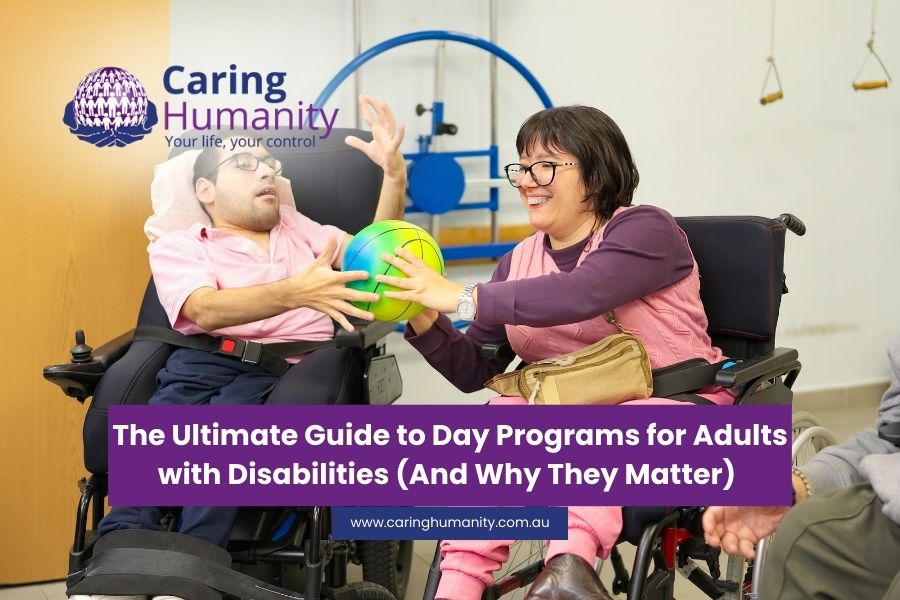
Life is about a lot more than just getting by at home. It’s about that feeling of being out in the world, having a purpose, and being a familiar face in your own neighbourhood. For plenty of NDIS participants in Canberra and right across Australia, day programs for adults with disabilities aren’t just a way to fill time, they’re a ticket to independence, a place to make real mates, and a way to finally feel like you belong.
In 2026, the way we look at disability support has changed for the better. We’ve moved well beyond those old-school, one-size-fits-all centres where everyone did the same thing at the same time. Today, the focus is on dynamic disability day activity programs that actually happen in the heart of the community.
These programs are all about helping you build the life you want, one skill, one friendship, and one adventure at a time. At Caring Humanity, we see these programs as more than just a service. And no matter whether you are interested in learning about the Canberra light rail, taking some classes in a local pottery, or learning how to cook a healthy meal with your family, these programs are the places where such ambitions start bringing results. It is all about going out there and making your own life.
1. What Exactly are Day Programs in 2026?
Unless you have investigated day programs within the last few years, you may be flabbergasted by the fact that they have changed so much. In the past, “day centers” often meant staying inside a single building doing basic crafts. Today, the industry has shifted toward community access programs for adults with disabilities.
Empowerment Over Observation
The modern approach is all about active inclusion. It means getting the support you need to do exactly what everyone else in the community is doing. Plainly speaking, it is a matter of fair go. These programs provide a safe, supported environment where you can try new things, like joining a mainstream gym or volunteering, without the stress of navigating it all on your own.
Why the Location Matters
You’ll find that many adult disability support services in daily programs now take place in local libraries, community hubs, and public spaces. By moving support out of “centres” and into the “real world,” we break down social barriers. When you’re out at the shops or a local park, you aren’t just a “participant”; you’re a local resident engaging with your town.
2. Why These Programs are Truly Transformational
It’s easy to look at a day program as just “something to do,” but the benefits go much deeper than the activity itself. Research into disability inclusion of day programs shows that regular community engagement significantly improves mental health and physical wellbeing.
Building Genuine Social Connections
Feeling lonely is one of the hardest parts of living with a disability, but it shouldn’t be that way. Disability inclusion of day programs is a relaxed way to get out and meet people who actually like the same things you do. It’s about finding your tribe; the kind of mates you can have a proper laugh with over lunch or text during the week to chat about your favourite show.
Mastering Life Skills for Independence
From money handling and grocery shopping to digital literacy and personal grooming, life skills programs for disabled adults focus on the practical stuff. We’re talking about building blocks of independence. Knowing how to operate a banking application or a recipe is not merely a lesson; it is a step to having to rely less on support in the future.
The “Confidence Cycle”
Confidence does not come naturally to anyone; it is a muscle and must be worked. Whenever you are able to cope with a new situation successfully, such as when you order a coffee in a busy cafe at Canberra or when you locate the right platform at the train station, you are doing a rep. Gradually, such reps develop a feeling of I have this, which transfers into all other areas of your life.
3. Navigating NDIS Funding: How to Pay for Your Program
Understanding the NDIS Price Guide can feel like learning a second language. When it comes to NDIS funded day programs for adults, the funding usually sits in two main “buckets” within your plan.
Core Supports (Assistance with Social and Community Participation)
- The Goal: To get you out and about in the community right now.
- How it works: This is the most common funding used. It pays for a support worker’s time while they assist you in attending a group or a local event. The current weekday rate for standard 1:1 support (Line Item 04_104_0125_6_1) is approximately $70.23 per hour.
- A Note on Ratios: To make your funding stretch further, many people choose group-based activities. To illustrate, a 1:3 ratio (one worker against three people) will reduce the cost down to approximately $27.50 per person per hour, which will enable you to enjoy more days of programming per week.
Capacity Building (Increased Social and Community Participation)
- The Goal: To learn specific skills so you can eventually participate more independently.
- How it works: This budget is often used for structured supported day activities for NDIS participants that have a clear learning outcome, such as travel training or a specialized communication workshop.
4. Spotlight on Canberra: Local Inclusive Activities
Being based in the ACT gives us access to some of the most inclusive spaces in the country. If you’re looking for disability day activity programs in Australia, Canberra really sets the standard. Here are some of our favourite local missions:
National Gallery of Australia (NGA)
The NGA isn’t just for art critics. They have fantastic “Art and Dementia” programs and quiet sessions for those with sensory sensitivities. It is an ideal location to train in being within a social environment whilst experiencing some of the finest cultures the nation has yet to offer.
Lake Burley Griffin
It can be the Bridge-to-Bridge walk or a picnic in a quiet corner at Commonwealth Park; the lake has flat and easy trails that are best suited to the low-sensory afternoon. It is an awesome alternative to physical health targets without the high intensity of a gym.
The Canberra light rail
For many of our participants, learning to use the light rail is a huge milestone. It’s modern, accessible, and connects some of the best parts of the city. We spend a lot of time doing “travel training” reps here so people can head to Gungahlin or the City independently.
5. What to Look for in a Quality Provider
Let’s be honest, not all programs are the same. Since this is your life and your future we’re talking about, you’ve got every right to be a bit picky. When you’re looking around for disability inclusion day programs in Victoria or the ACT, keep these things in mind:
- Do they listen? A good provider won’t just hand you a dusty old calendar and tell you where to be. They should be asking what you actually enjoy doing and matching activities to your personality.
- Will you see the same faces? It’s hard to build trust if there’s a new staff member every second week. Look for a team that’s stable and well-trained consistency is everything.
- Do they know the neighbourhood? You want a team that knows the local area like the back of their hand. A great Canberra provider should know the best accessible paths around Lake Burley Griffin or which café in Richardson makes the best brew.
- Are they “Registered”? Always check if they’re a Registered NDIS Provider. It basically means they’ve been properly audited and have to follow strict safety and quality rules. It’s that extra peace of mind.
6. A "Day in the Life" at Caring Humanity
A typical Tuesday of one of our crew would look like the following:
- 10:00 AM -The Morning Brew: It all starts with us at our hub or a local cafe. We get our coffee, do the news, and talk about all that everybody wants to accomplish with the day.
- 10:30 AM – Levelling up your skills: Today might be “Digital Literacy.” We’re getting stuck into the Transport Canberra app, so everyone feels confident planning a trip to the National Museum.
- 12:00 PM -The Community Kitchen: We go back to prepare lunch collectively. It is one of the best methods to learn how to keep a safe kitchen and how to cut food using a knife and collaborate to create something delicious.
- 1:30 PM – Afternoon Adventure: We’re off! Based on what we planned that morning, we might head to a local gallery or find a regional park for a bit of fresh air and a stroll.
- 3:00 PM – Home time: We head off for the day feeling like we’ve actually achieved something, staying connected, and already looking forward to next week
7. The NDIS "New Framework" Planning
From mid-2026, the NDIS is introducing New Framework Planning. This is a big shift designed to make the system fairer.
- Support Needs Assessments: The assessors will not simply look at the paperwork but have a structured interview with you (and your family or support person) regarding your real life.
- Flexible Budgets: It will have more of a total budget instead of more defined line items. This means you’ll have more choice in how you spend your community access programs for adults with disabilities funding.
- Longer Plans: Many new plans will be longer in duration, which implies that there will be less stressful reviews and time to spend on living your life.
8. Frequently Asked Questions
How often do I have to attend a disability day program?
Honestly? It’s completely up to you. Most day programs for adults with disabilities are super flexible. Depending on what you want to achieve and what’s in your NDIS budget, you might just come in one day a week to catch up with mates, or you might head out with us for all five. You’re the boss.
Does the NDIS pay for my lunch, coffee, or movie tickets?
Short answer: usually not. The NDIS is there to pay for the support you need—like the worker’s time and expertise to keep things safe and fun—but it doesn’t cover “everyday” costs. You’ll still need to bring a bit of your own cash for “out-of-pocket” stuff like a café lunch, a movie ticket, or entry fees to Canberra spots.
Is transport included in NDIS day programs?
We can definitely help you out here. We often assist with getting you to and from our hub, or better yet, we can build travel training into your day. It is an excellent method of understanding how to independently use the Canberra bus or light rail, which is a huge victory in the independence arena.
Can I use NDIS social participation funding for a holiday?
Yes, but there’s a bit of a catch. You can use your funding to pay for a support worker to come along and help you out on a trip. However, the NDIS does not cover the holiday aspect of it, therefore you would still have to meet your own flight, accommodation, and food. It is about covering the support, and not the vacation.
Do you provide high-intensity support for complex needs?
Absolutely. As a registered provider of adult disability support services, we’re set up for high-intensity support. Whether you’ve got complex medical needs or need a bit of extra help with certain behaviours, our team is trained to make sure you’re looked after safely and with plenty of respect.
Why Caring Humanity is Your Local Partner
At Caring Humanity, we aren’t just a service provider; we’re community builders. Based right here in Canberra, we know the local landscape inside out. We know the best quiet spots in the National Library, the most accessible paths at the Arboretum, and the cafés that make the best “flat white.”
We don’t believe in “minding” people. We believe in walking alongside them. Our goal is to see you thriving, making your own choices, and feeling like a true local in every sense of the word. We take the time to get to know your family, your goals, and even your favourite footy team, because those details matter.
Conclusion: Don't Wait for "One Day"
The world is a pretty big place, and it’s a whole lot better when you’re right in the middle of it. Day programs for adults with disabilities are about opening doors and giving you the tools to walk through them with your head held high. Whether you want to learn a new skill, find a new hobby, or just make a few new mates to share a laugh with, there’s a spot waiting for you.
You aren’t meant to live life on the sidelines. Let’s get you out there.
Let’s Get Your Adventure Started
Contact Caring Humanity Today
