
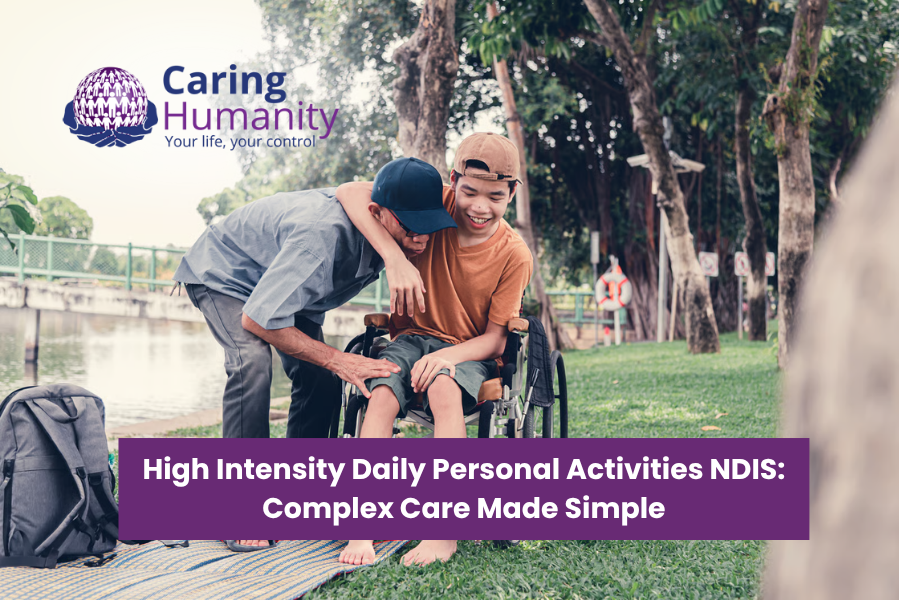
The implementation of High Intensity Daily Personal Activities into an NDIS plan creates a major change which establishes new support methods for the participants. The special designation requires complete change from everyday help services to dedicated clinical care which needs special medical skills and full-time expert monitoring.
The NDIS system brings complex technical and legal challenges which require specialized expertise to solve for most Canberra area families. People have natural tendencies to request expert explanations about necessary credentials for providing care and the domestic clinical safety protocols and methods which help maintain personal independence during intensive medical support situations.
This guide is designed to clarify the technical framework of high-intensity NDIS support. The upcoming sections will analyze current medical practices and the need for strong professional control and the complete methods which enable access to top-tier services throughout the Australian Capital Territory.
What are High Intensity Daily Personal Activities under the NDIS?
The term High Intensity describes support that carries a high danger when the task requires proper execution. The tasks need clinical expertise combined with healthcare professional supervision to ensure proper execution.
If your daily routine involves any of the following, you are likely utilizing NDIS high intensity support:
- Complex Bowel Care: Management of severe constipation or specialized evacuation techniques.
- Enteral Feeding (PEG/NG): Assistance for those who cannot consume food or water orally.
- Tracheostomy & Ventilator Management: Supporting participants who need help breathing through specialized equipment.
- Urinary Catheter Management: The process maintains both the hygienic condition and operational capability of both indwelling catheters and suprapubic catheters.
- Subcutaneous Injections: The process requires essential medications to be delivered through injection.
- Complex Wound Management: The medical team delivers treatment for patients who have chronic wounds or need care after surgical procedures.
The disability services in Canberra disability services to participants who have serious health conditions through their dedicated services which help them maintain home safety while preventing hospital admissions.
The Science of Safety: NDIS High Intensity Support Standards
Google and the NDIS both prioritize Expertise and Trustworthiness. To get the best results from your funding, your care must be grounded in the NDIS High Intensity Support Skills Descriptors.
1. The Role of the Registered Nurse (RN)
In a high-intensity environment, the Registered Nurse is the architect of your care. While they may not be in your home 24/7, they are responsible for:
- Developing your clinical Care Plan.
- Training your support workers on your specific needs.
- Conduct regular competency assessments to ensure every task is performed safely.
2. Clinical Governance
A professional provider doesn’t just send a worker to your door. They have a system of Clinical Governance. This means there is a clear line of accountability, regular audits of care notes, and a process for immediate intervention if your health status changes.
3. Skill-Specific Training
To assist with personal activities at a high-intensity level, a worker must be specifically trained for your equipment and your condition. A worker trained in wound care is not automatically qualified for tracheostomy suctioning. This specificity is what keeps you safe.
Maximising Quality of Life with NDIS Palliative Care
One of the most essential yet misunderstood areas of the NDIS is NDIS palliative care. For many Canberrans, this support is about much more than medical treatment; it’s about dignity, comfort, and the freedom to spend your final chapters in a familiar environment.
Bridging the Gap Between Health and Disability
While ACT Health provides medical palliative specialists, the NDIS provides daily living support that makes home life possible. This includes:
- Enhanced Personal Care: Frequent hygiene and comfort support.
- Assistive Technology: Users can use specialized beds together with pressure mattresses and communication devices.
- Social & Emotional Support: The program enables you to maintain connections with both your community and your family members during your challenging period.
The two systems establish a comprehensive service which gives complete priority to participant preferences.
Why Local Expertise Matters in Canberra
Canberra is a unique city with a highly integrated health network. Selecting a local provider for your high intensity daily personal activities NDIS needs gives you multiple strategic benefits:
- Integration with ACT Health: Local providers have established relationships with Canberra Hospital and Calvary which enable better transitions from hospital to home.
- Local teams can reach specialized equipment failures or urgent RN care plan needs at their designated locations before national providers.
- A local team has knowledge about the most reachable areas in Manuka and the most peaceful trails around Lake Burley Griffin and the various transport systems used in ACT.
How to Choose a High Intensity Provider: A Checklist
Not every NDIS provider has the necessary resources to deliver services for complex medical needs. The checklist helps interviewers assess potential partner organizations through their selection process:
- Do you have an RN on staff? (Essential for oversight).
- How do you assess worker competency? (Look for formal, task-specific signoffs).
- What is your emergency protocol? (They should have a 24/7 clinical contact).
- How do you handle NDIS palliative care? (Look for an emphasis on empathy and coordination).
- Can I meet the workers first? (To ensure a personality match).
FAQs: Your Complex Care Questions Answered
What is the difference between standard and high intensity NDIS support?
Standard support covers general tasks like cleaning, cooking, and basic hygiene. High intensity support is required when those tasks involve a clinical risk—such as managing a breathing tube, a feeding tube, or a catheter. It requires specialized training and oversight from a health professional.
Does the NDIS cover the cost of a Registered Nurse?
Yes, if your clinical needs require the skills of an RN, the NDIS can provide funding for “Nursing” in your plan. However, for most daily tasks, the NDIS funds specially trained support workers who are supervised and trained by an RN to keep costs manageable while maintaining safety.
Can high intensity supports be delivered in my own home?
Absolutely. In fact, that is the primary goal of high intensity daily personal activities of NDIS funding, to provide hospital-level safety in the comfort of your own home, allowing you to stay connected to your family and your community in Canberra.
How do I know if my support worker is actually qualified?
You have the right to ask your provider for evidence of training. A professional provider will have a “Competency Register” showing exactly when a worker was trained, who trained them (usually an RN), and when their skills were last reviewed for your specific needs.
Is NDIS palliative care only for the elderly?
No. NDIS palliative care is available to any participant with a life-limiting illness, regardless of age. The focus is on providing the support needed to maintain quality of life, comfort, and independence for as long as possible within the participant’s home environment.
What happens if my support worker isn’t a good fit for me personally?
High-intensity care often involves many hours of support, so personality fit is crucial. If you don’t feel comfortable with a worker, you should speak to your provider immediately. A good provider will have a pool of trained staff and will work to find someone who respects your home and your personality.
Can high intensity support help with community access?
Yes. Your health needs shouldn’t trap you at home. If you have a tracheostomy or require PEG feeding, a trained worker can accompany you into the community, ensuring your clinical needs are managed while you enjoy social activities, work, or education across Canberra.
Conclusion
The High Intensity label might sound intimidating, but it is a gateway to a safer, more supported life. By partnering with the right experts, you can ensure that your health needs are managed with clinical precision, leaving you free to focus on what really matters, living your life on your own terms.
In the ACT, we have a wealth of resources and a community that values inclusion. Whether you are seeking daily medical assistance or specialized NDIS palliative care, the right support is just a conversation away.
Secure Your Foundation for Independence
At Caring Humanity, we don’t just manage tasks; we care for people. Our Canberra-based team specializes in high-intensity NDIS support, combining clinical excellence with the empathy you deserve.
Contact Caring Humanity today to discuss your needs and develop a tailored, high-quality care plan.
