
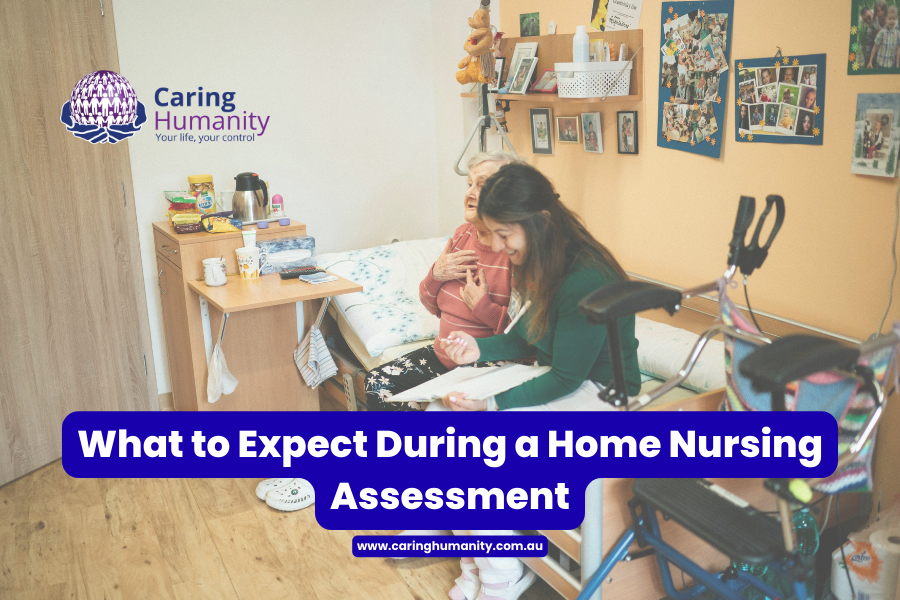
A nurse can assist home based individuals tremendously to live easy lives. You must be aware of what will happen during a home nursing assessment in case you are part of the NDIS and receive the appropriate care. We offer NDIS community nursing care to every part of Australia and at Caring humanity, we ensure that it suits the requirements of the individual.
Understanding NDIS Community Nursing
Why Home Nursing Assessments Are Important
- Determines healthcare requirements: Nurses assess medical history, the existing conditions, and daily care needs.
- Develops a care plan: On the basis of the assessment, a comprehensive care plan is developed, indicating the nature, frequency and duration of nursing services.
- Promotes home safety: Nurses evaluate the home surroundings to make sure it helps in providing care and mobility.
- Supports NDIS planning: The assessment provides information that assists the participants to include community nursing services in their NDIS plan.
Giving the time to complete evaluation, the nurses will be able to provide the participants with the most suitable and efficient care.
What Happens During a Home Nursing Assessment
1. Initial Contact and Scheduling
2. Review of Medical History
3. Physical Assessment
4. Home Environment Evaluation
5. Goal Setting and Care Planning
Preparing for Your Home Nursing Assessment
- Collect medical records: Bring your prescription, medical history and any recent test results.
- List your current medications: Include dosages and schedules to be able to control medication.
- Prepare questions: Write down any concerns or questions about your care, medications, or support needs.
- Make the homes accessible: Have clear paths and make the area comfortable to the nurse to work.
NDIS Community Nursing Registration Requirements
To provide NDIS community nursing services in Australia, nurses must be:
- Registered with the NDIS Quality and Safeguards Commission
- Hold current nursing qualifications and credentials
- Committed to delivering person-centered care
Choosing an NDIS-registered provider ensures that services meet high-quality standards and comply with all regulations. At Caring Humanity, all our community nurses are fully registered and experienced in supporting participants across Australia.
Benefits of NDIS Community Nursing Care
- Continuity of care: Professional nurses should visit the patient regularly to monitor and intervene in case of early signs.
- Personalized support: Care plans are based on the individual needs and preferences of the participant.
- Less time in the hospital: Home care may help avoid complications and unnecessary hospitalizations.
- Family support: Nurses also educate and give advice to the family members enabling them to take care of the loved one.
NDIS Home Health Assessment Canberra: Registered Nurse Home Visits Explained
Final Thoughts
A home nursing assessment is the first step toward receiving high-quality NDIS community nursing care. By understanding the process, preparing effectively, and engaging with a registered provider, participants can ensure they receive safe, personalised, and comprehensive care.
If you or your loved one require NDIS community nursing care, a home nursing assessment is the perfect place to start. By taking the time to understand your needs, we help you navigate the NDIS journey with confidence and care.
Frequently Asked Questions
What is a home nursing assessment in Canberra?
A home nursing assessment in Canberra is a visit by a healthcare professional to evaluate your health needs at home. It looks at your daily care, mobility, and medical requirements. The goal is to develop a safe, personalised support plan. This helps ensure you get appropriate care that supports your wellbeing.
What happens during an NDIS home health assessment?
An NDIS home health assessment reviews your medical and personal care needs to determine required supports. A trained assessor evaluates your physical condition, home environment, and daily routines. This process helps create or adjust your NDIS support plan. Recommendations guide ongoing care and therapy services.
Why is a registered nurse home visit important?
A registered nurse home visit ensures that clinical care is delivered safely and correctly at home. The nurse checks health conditions, administers treatments, and assesses ongoing needs. They also educate participants and caregivers on best practices. These visits support better health outcomes and confidence in daily care.
How does the NDIS nursing care assessment process work?
The NDIS nursing care assessment process involves evaluating health, personal care, and support needs. It usually begins with a registered nurse visit to gather detailed information. The assessor then creates a tailored care plan based on your goals and health requirements. Regular reviews ensure care stays appropriate over time.
Who conducts home nursing assessments for NDIS participants?
Home nursing assessments for NDIS participants are typically conducted by registered nurses or allied health professionals. They are experienced in working with diverse health needs and disability support. Their expertise ensures accurate care planning. They also coordinate with your support team for consistent care delivery.
Can family members be involved during the assessment?
Yes, family members or carers can be present during a home nursing assessment in Canberra. Their input helps assess daily routines and personal care needs more accurately. They can share observations about health changes or challenges. Involving loved ones ensures a more comprehensive care plan.
What should I prepare before a home nursing assessment?
Before an assessment, gather information on your health history and daily challenges. Have details about medications, existing care routines, and any mobility aids available. Also, prepare a list of goals you want to achieve through support. This ensures the assessor can tailor your care plan effectively.
